
Glossary > Packaging instructions
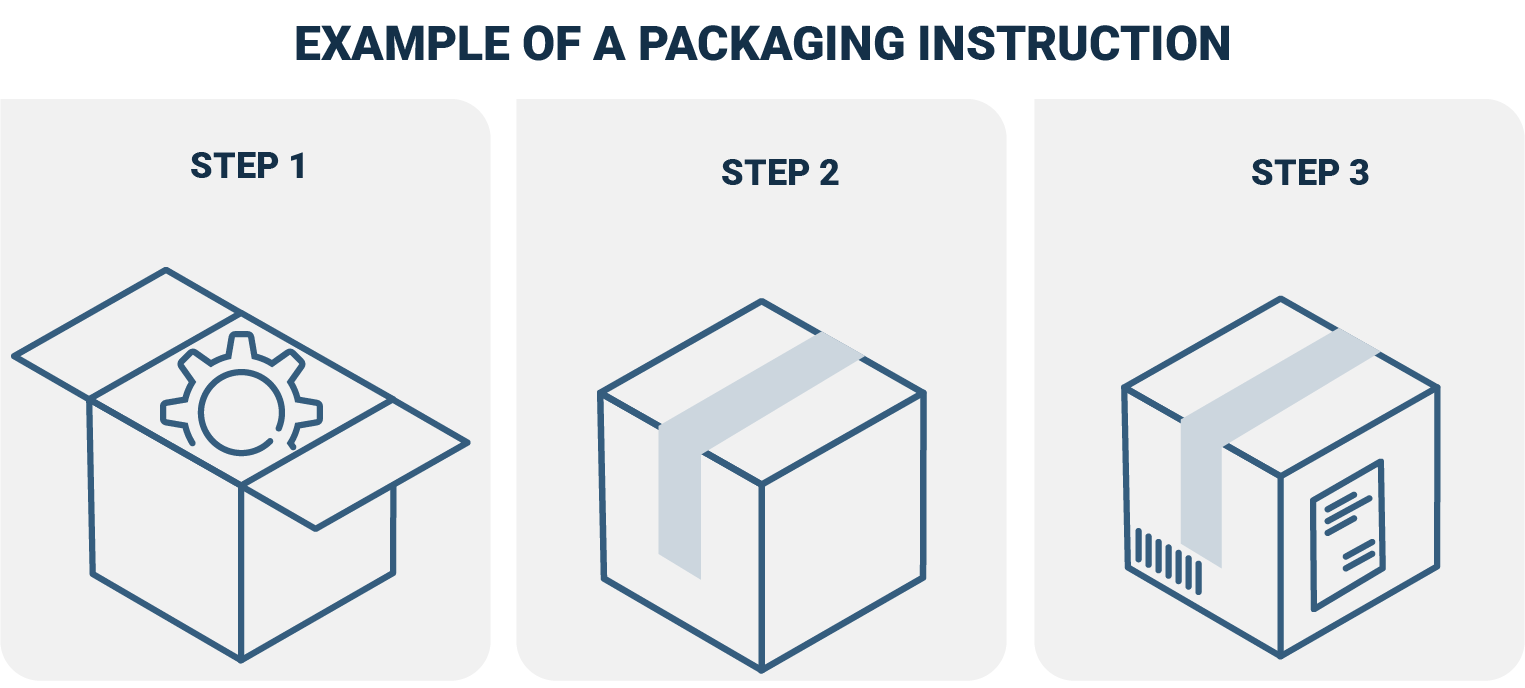
Packaging instructions are a written document or specific instructions for the correct packaging of a product. It is of particular relevance in logistics, shipping and production.
Packaging instructions contain a whole range of information that can vary depending on the industry, the product to be packaged, guidelines and specifications, etc. This information includes, for example
the type of packaging - for example cardboard, wood, bubble wrap, etc.
the packaging materials to be used - e.g. film, filling material, adhesive tape, etc.
the quantity and arrangement of the products in the packaging
any necessary markings - e.g. labels, hazardous goods signs, etc.
special requirements - for example, for sensitive or hazardous goods
the packaging units - for example, how many items are packed in a box
the dimensions and weights of the packaged units
security measures such as stretch film, edge protection, etc.
the attachment of the delivery note
The packaging instructions can also contain details about the delivery bill itself. These include, for example
Order number
delivery address
Part number and part description
Total delivery quantity and partial quantity per package
Number of packages
Weight per package
Goods tariff number and origin of goods
If applicable, information on dangerous goods according to legal regulations
Packaging type and materials such as cardboard, film, filling material, adhesive tape
Information on units and properties such as number of pieces per unit, dimensions, weight, safety measures
Delivery bill and shipping details incl. order number, delivery address, article information, quantities, dangerous goods data
It is quite possible that packaging instructions in your company really only apply and suit your company. Beyond this and as soon as certain goods are involved, binding regulations may apply. A common example can be found in dangerous goods legislation or, more specifically, in the ADR - the European Agreement concerning the International Carriage of Dangerous Goods by Road.
This defines packaging instructions as specific legal regulations for the packaging of hazardous substances. Depending on the hazardous substance and means of transport, these packaging instructions are identified by codes such as P001, LP903 or P908. For liquid substances, for example, P001 defines which inner and outer packaging is possible, which volumes are permitted and when additional ventilation equipment must be used.
ADR regulations govern the packaging of dangerous goods
Packaging codes such as P001 or P908 specify concrete regulations
Like any other instruction, the packaging instruction also enables uniformity and standardization. It provides your employees with clear guidelines and helps to achieve consistent packaging quality and a low error level.
As an instructional document, it helps both experienced and new employees to quickly familiarize themselves with the work processes. At the same time, the packaging instructions ensure that the result is always a correctly packaged product that is optimally protected against transport damage, breakage or moisture.
Of course, packaging instructions also support compliance with all standards, guidelines and specifications. This means you are on the legally compliant side when it comes to hazardous goods or export and customs regulations.
And last but not least, the conscientiously completed packaging instruction is also a documentation tool that can provide information on whether all instructions have been followed and all information requirements fulfilled. This creates better traceability in the event of audits and complaints.
Standardization and QA of packaging through clear, uniform specifications
Training aid and work facilitation for all employees
Legal certainty and traceability for standards, specifications and audits

Let's summarize once again what the packaging instruction is aimed at.
By standardizing the packaging, it simplifies the delivery process and increases the protection of the goods.
Standardization also leads to greater efficiency in the logistics chain.
Packaging instructions should also ensure that you always pack in accordance with the applicable standards and guidelines and that you can prove this if required.
Packaging sounds so simple, but it can involve complex, specification-driven processes. You can optimally support these processes by relying on digital instructions - for example with our Connected Worker platform weasl.
Sounds appealing? Then take a look at what weasl can do - in our detailed product flyer.