Glossary > ISO 9606
ISO 9606 governs the testing and certification of welders for fusion welding of metallic materials. The standard specifies the practical testing conditions under which a welder is considered qualified for a specific combination of welding process, material, joint configuration, and position, thereby serving as the individual-level supplement to the company-wide requirements of ISO 3834.
Publisher: International Organization for Standardization (ISO)
Current edition: DIN EN ISO 9606-1:2017 (Steel)
The standard is intended for welders as well as companies that perform welding work on metal components and are required to demonstrate their qualifications—ranging from metal fabrication companies to mechanical and plant engineering firms and steel construction companies. It is particularly relevant for companies that are certified to ISO 3834 or EN 1090, or that are seeking such certification, since both standards require the use of qualified welders.
Practical examination: Fabrication of a test piece under the supervision of a certified examiner or a testing laboratory
Scope of the test: a precisely defined combination of process, material group, weld type, position, filler material, and dimensions
Destructive and non-destructive testing: Verification of weld quality, for example through bend testing or X-ray inspection
Test certificate: documented evidence containing all test parameters, serving as the basis for use in the workplace
Validity extension: Regular confirmation of continuity by the employer
Retraining: arepeat practical examination no later than six years after the initial training
ISO 9606 tests and certifies the practical skills of individual welders for specific welding tasks. ISO 3834, on the other hand, is the overarching standard that covers the entire welding organization—including processes, equipment, welding coordination, and documentation. The two standards are directly interlinked: A company can only be certified to ISO 3834 if it consistently employs welders who hold a valid ISO 9606 certification appropriate for the respective job.
The use of welders without a valid or appropriate ISO 9606 certification directly jeopardizes the company’s ISO 3834 and EN 1090 certifications. During audits, incomplete or expired welder qualifications are among the most common nonconformities; in the event of damage—such as a weld failure—proof of qualification also becomes a key factor in liability issues.
Not directly, but effectively essential, since ISO 3834 and EN 1090-2 require the use of certified welders.
Generally, two years if continuity is confirmed, with a renewal practical exam no later than six years thereafter.
For a fixed combination of process, material, weld configuration, position, filler material, and dimensions.
ISO 9606 certifies individual welders, while ISO 3834 governs the entire welding company.
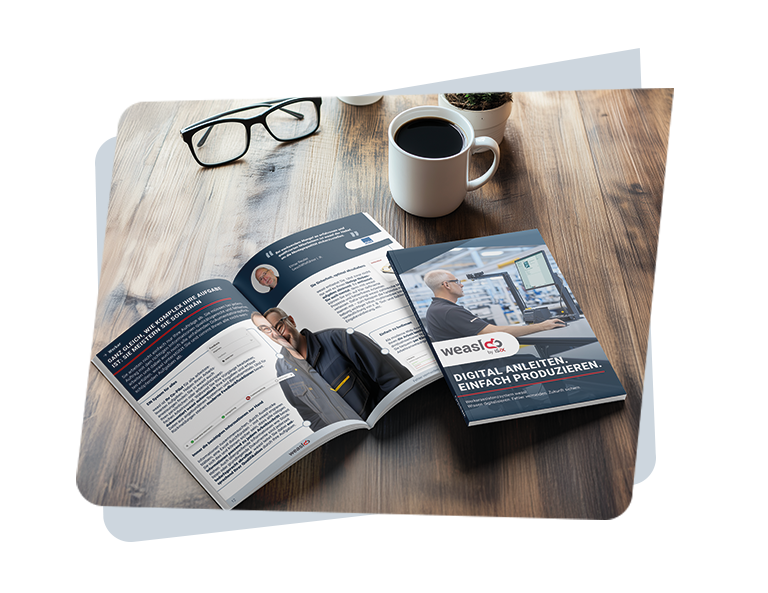
The critical aspect of day-to-day operations is ensuring that each welder is assigned only to welding tasks for which they have a valid, appropriate certification—no trivial task given the variety of jobs and materials involved. Connected worker platforms like weasl automatically verify that a welder’s qualifications match the requirements of the respective work step and block the task from being performed if there is no suitable, valid certification.
Learn more about weasl and download our product flyer now.