
Glossary > Component assembly
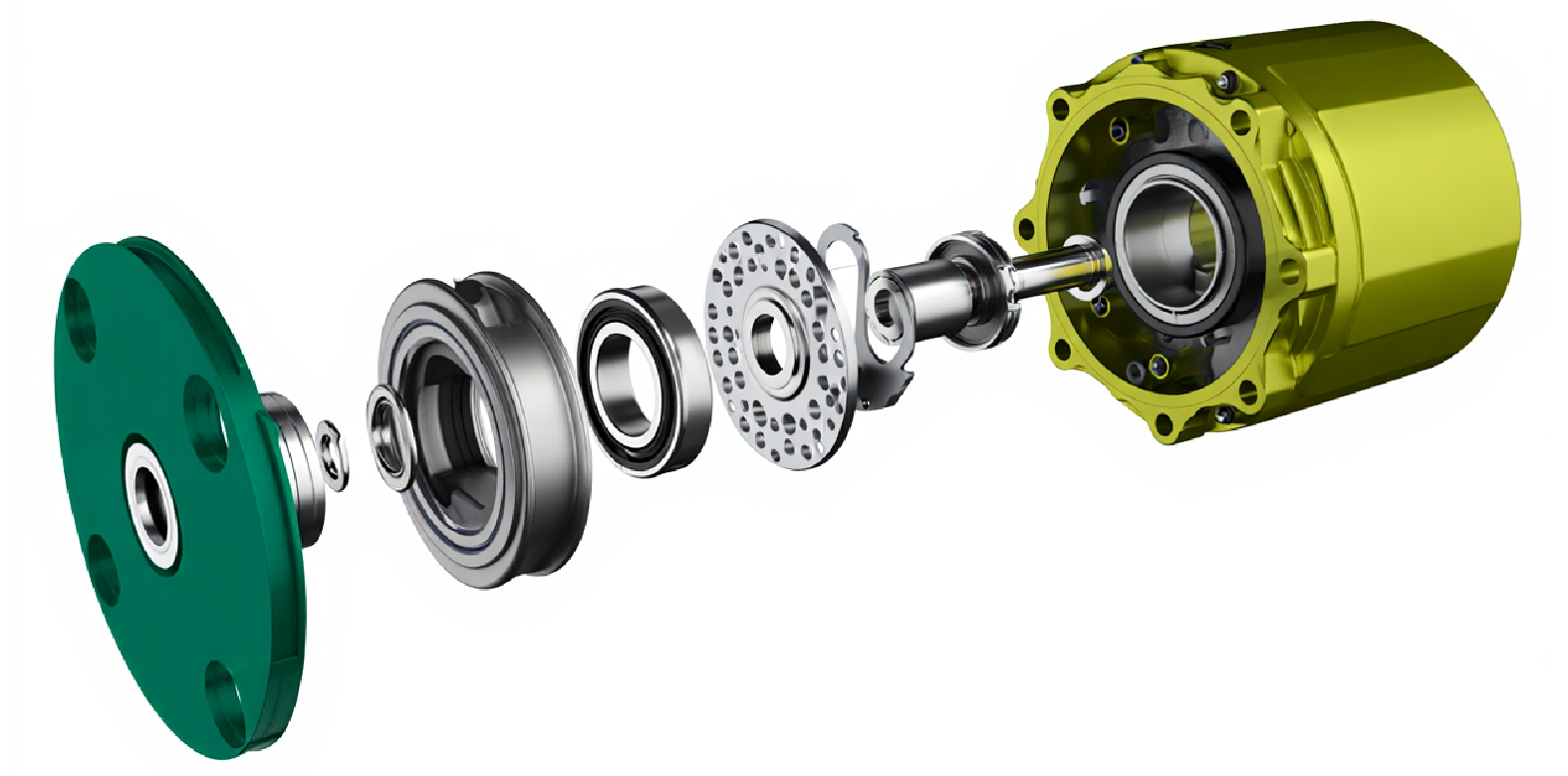
Subassembly is a manufacturing process in which individual components are professionally assembled to form a subassembly or a complete end product. Accordingly, component assembly can be located at various stages of your production process - at the very beginning when assembling individual components or at the very end when assembling the end product.
Assembling individual components into assemblies or end products
Use in various phases of the production process
Many paths lead to the assembly. Depending on what needs to be assembled and how, you can rely on manual, semi-automated or even fully automated assembly of components. Automation increases the efficiency of your production and assembly and reduces the susceptibility to errors. However, in many applications it is still necessary to assemble components manually.
Whether manual or automated, there are typically various methods available to you for assembling professional, resilient assemblies:
Adjustment
Strictly speaking, the adjustment of components is not yet an assembly process. Rather, it is used to prepare for the actual assembly of components by having your fitters align the components to be joined precisely.
Gluing
When gluing, your fitters use a suitable adhesive to create a permanent connection between the components. This is referred to as a material-locking joining process that does not result in any mechanical changes to the components.
Riveting
The situation is different with riveting. With riveting, components with a lower thickness are usually joined together with a rivet. This is referred to as a force-fit process. The components must be provided with appropriate rivet holes for assembly.
Welding
In welding, the components are heated by a laser, for example, and fused together. This creates a permanent connection between the components.
Screws
If the assembly is to be mounted in such a way that the components can also be separated again, then screw connections are ideal. The components have corresponding screw and threaded holes or are locked in place with a screw and nut. This is referred to as a form-fit or force-fit method.
Testing
Like adjustment, testing is not an assembly process in the literal sense. Rather, it is used for quality assurance. A quality assurance employee checks the assembled components and ensures that the quality requirements have been met. With digital worker guidance , the fitter can also do this himself as part of the worker self-inspection.
Assembly types: Manual, partially or fully automated
Adjustment: Precise alignment of the components before assembly
Bonding, riveting, welding, screws for joining components
Screw connections ideal for detachable connections, e.g. when maintenance is required
Testing: Quality assurance through visual inspection or worker self-inspection
The two biggest challenges in component assembly can be summed up in two words: precision and expertise.
When assembling components, fitters have to work with absolute precision in order to ensure the functionality of highly complex modules with different subsystems. In most cases, various specialist areas such as electrical engineering, pneumatics or mechanics also play a role here. Each of these areas in turn requires corresponding expertise.
Employees in assembly must either already have this know-how or it must be made available to them in a professional and reliable manner - for example in the form of digital work instructions. In addition to the actual assembly, this also includes ensuring the defined quality standards.
Precision is crucial for the function of complex assemblies
Interdisciplinary know-how is often required
Digital instructions useful for process reliability and QA
Component assembly brings a high degree of flexibility and efficiency to your production processes. By assembling components into functional assemblies, you create the basis for the efficient production of a wide range of products - both for individual production and series production.
By establishing component assembly in your production, you optimize your processes and workflows and thus save time. Your fitters specialize in the assembly of the relevant components and thus acquire valuable expertise. The high level of assembly precision combined with modern QA mechanisms allows you to sustainably increase the quality of your products.
Component assembly also enables you to streamline and (partially) automate manufacturing processes. This saves resources and ultimately costs. In addition, efficient work with assemblies makes it possible to react flexibly to changing customer requirements or order sizes.
More efficiency through optimized processes and specialization
Higher quality thanks to precise assembly and modern QA
High flexibility for a wide range of customer orders
Put simply, the aim of component assembly is to professionally combine several individual parts or pre-assembled components into a functional, high-quality assembly or end product.
In a figurative sense, the aim is of course to make your production as effective, efficient and sustainable as possible and to achieve the greatest possible flexibility for a wide range of customer requirements.
Professional assembly of individual parts into functional assemblies or end products
Increasing efficiency and flexibility in production

Guide your fitters to the finished assembly with process reliability and enable them to complete relevant test steps directly in the process. How can you do this? With digital assembly instructions in our Connected Worker platform weasl.
Find out what weasl can do for your company and get our detailed product flyer.