





Digital Work Instructions: How to Write Effective Templates and Maximize Their Potential
AI is considered the future of manufacturing. However, its implementation often fails due to a lack of process clarity, fragmented data, and siloed knowledge. Connected worker platforms address this problem. They digitize work on the shop floor, thereby laying the foundation for the effective use of AI—with people at the center.
The discussion surrounding artificial intelligence in industry is dominated by automation, robotics, and autonomous systems. The use of AI raises high expectations. Yet in practice, it often becomes clear that technology alone does not solve production problems. Without reliable processes, structured data, and the active involvement of people, it remains nothing more than raw computing power.
On the shop floor, decisions, deviations, and empirical data are often not recorded—or only inadequately recorded—by traditional IT systems. Work instructions are on paper, feedback is delayed, and quality data is documented in a fragmented manner. As a result, while systems are digitally set up, they are not truly connected. In this environment, AI finds hardly any usable context and can therefore have little impact.
People, context, and quality
Manufacturing companies face challenges such as increasing product variety, growing documentation requirements, and a shortage of skilled workers. The experiential knowledge of individual employees is thus becoming increasingly important. However, it is rarely available in a systematic way. And this has concrete consequences: New employees require lengthy training periods, and error rates rise. The key, therefore, lies not in complete automation, but in targeted digital support for people. When employees are guided, supported, and empowered, this leads to streamlined processes, consistent data, and reliable quality. On this basis, AI can effectively analyze, optimize, and, in the long term, automate.
The foundation for AI deployment
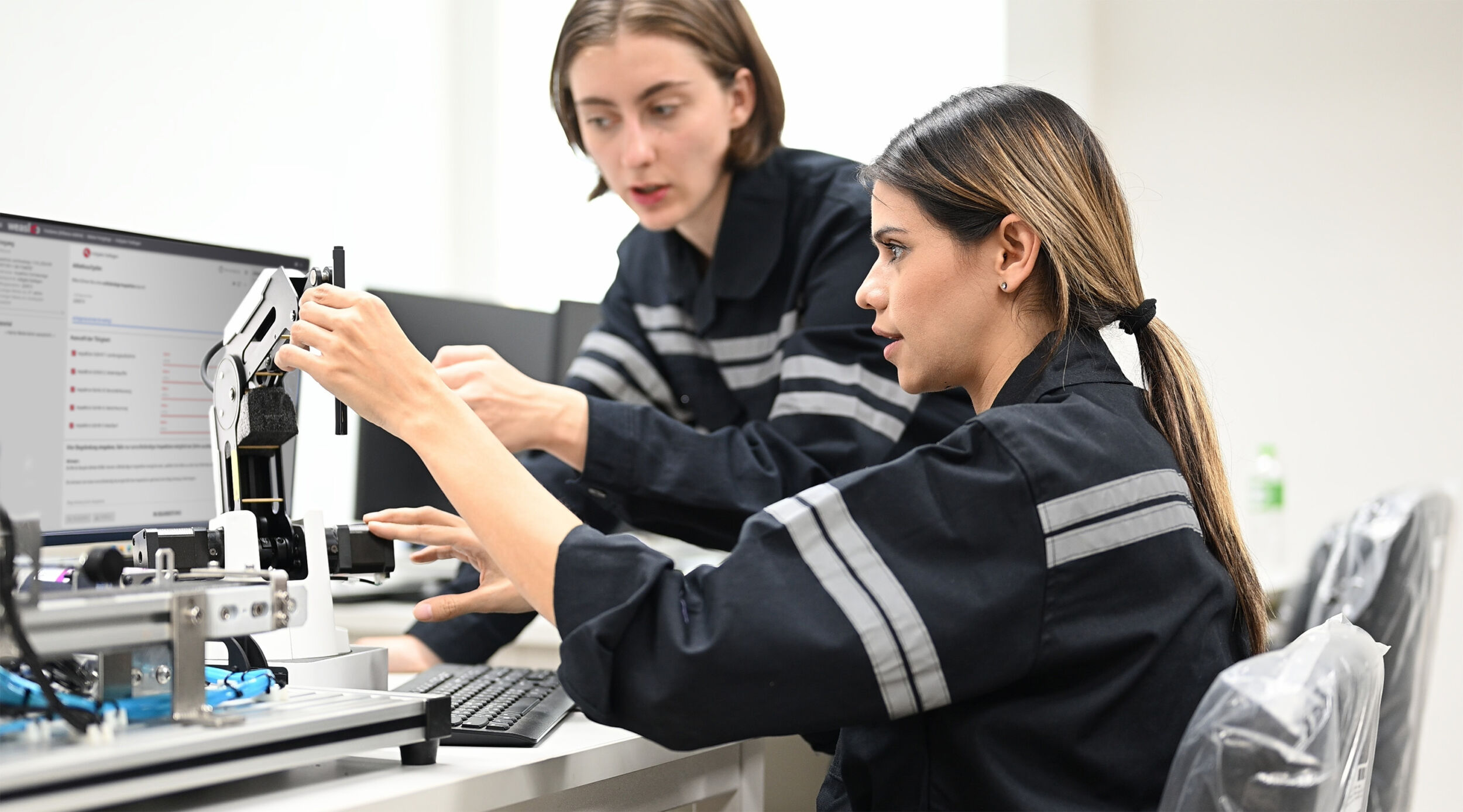
This is where connected worker platforms come into play. They digitize workflows directly on the shop floor and provide employees with the context-specific information they need for each step of the process. Digital work instructions, skill-based guidance, integrated quality checks, and automatic documentation form the foundation. A key aspect is end-to-end system and data integration. Order data from the ERP system, feedback to the MES software, quality data for CAQ applications, and machine data from IoT environments are linked together. This creates a unified view of the process, in which human work serves as a central data source.
Empowering employees
With the Weasl software, Isax focuses on empowering employees and supporting them through digital process guidance. In addition to guiding workers, the platform also offers orchestration capabilities: digital instructions, quality logic, and automatic documentation thus create a reliable data foundation—regardless of whether a person, a machine, or, in the future, a robot performs the work step.
Supporting agency
The use of AI will continue to advance in the coming years. The technology is most effective where processes are clear, data is reliable, and people are actively involved. Connected worker platforms form the foundation here and support the workforce’s ability to act.
This article first appeared in IT&Production.

Eduard Daoud is a computer scientist, executive, and digital transformation expert with a strong focus on technology, innovation, and business growth. As Chief Revenue Officer (CRO) at weasl, he is responsible for strategic business development, ...